
Building a custom recruitment platform for Clique Private Staffing
A boutique staffing agency built on spreadsheets, sticky notes, and the founder's memory. We gave them a premium public recruitment site and a purpose-built CRM to match — so growth doesn't mean drowning in endless admin.
Updated 26 August 2026
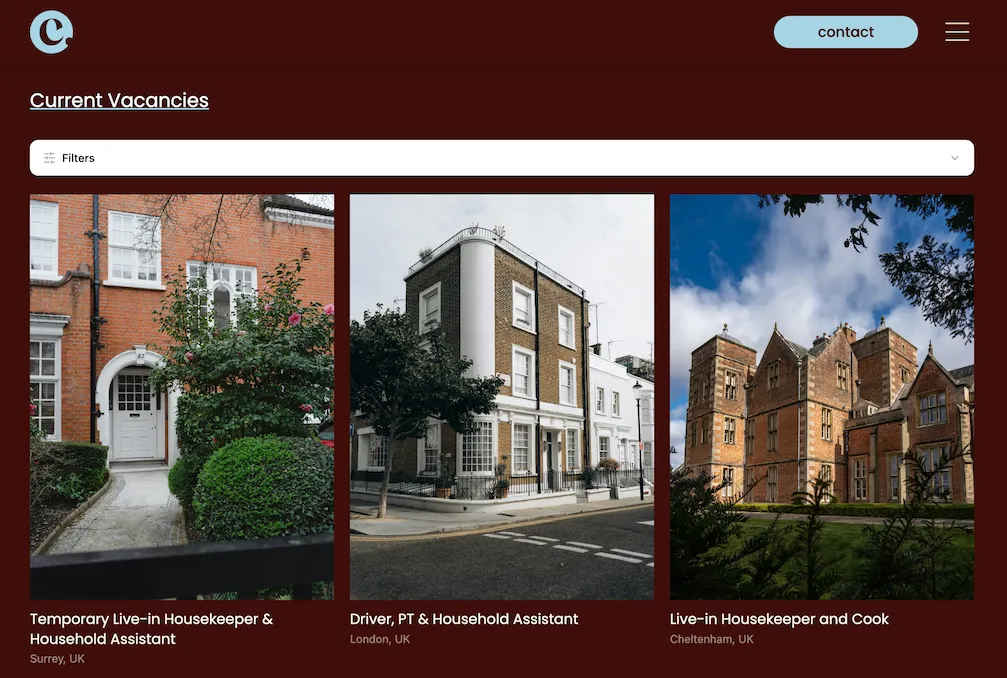
Clique Private Staffing place household and hospitality staff into private homes and superyachts across the UK, Europe and the USA. It’s a boutique premium operation: the quality of the placement is the whole product, and the founder personally vets every candidate.
The problem was that nothing about Clique’s internal systems reflected the same level of sophistication as their brand. Candidates applied by contacting the founder directly, emailing a PDF résumé into an already overflowing inbox. Those applications were then tracked by hand in a spreadsheet that only one person really understood. The public website was non-existent.
If that setup sounds uncomfortably familiar, you’re not alone. Most small businesses we talk to are running a version of this to some degree. A brand that looks the part out front, but is held together by a spreadsheet, one person’s memory and perhaps a bit of duct tape behind the scenes.
Clique came to us with a problem and a rough idea of what they wanted: something like an elegant public website with a jobs board, and a better way to organise their candidate and client information. Our job was turning that rough idea into a real system: one where the public site and the internal database aren’t two separate things, but a single cohesive tool that lets the founder and her team focus on what they do best: matching candidates to clients.
What we built: a public jobs board and a private CRM
Two things, working as one system.
The public-facing design is the work of Paula Caffrey, who set the visual direction for the site. We built it, and everything behind it.
A clean, branded custom recruitment website with a live jobs board, where candidates browse open roles and can apply directly — “apply directly” means the application lands in Clique’s custom system, not just an inbox where it can potentially be missed and forgotten (although it does land there too!). Every website submission is validated, stored against the role it came from, and triggers an automatic response. The founder stopped losing applications on day one and immediately started saving 8 hours per week on application admin.
The recruitment CRM quietly driving everything
The second half to this project is the part that website visitors don’t see, and it’s where most of the value lies.
We built a custom CRM and admin interface that lets the Clique team manage job listings, review applicants, and move candidates through their specific pipeline. Publish a role and the public jobs board updates immediately. Applications arrive in a queue instead of an inbox. A candidate’s full history lives in one place instead of being pieced together from memory, emails, and other scattered documents.
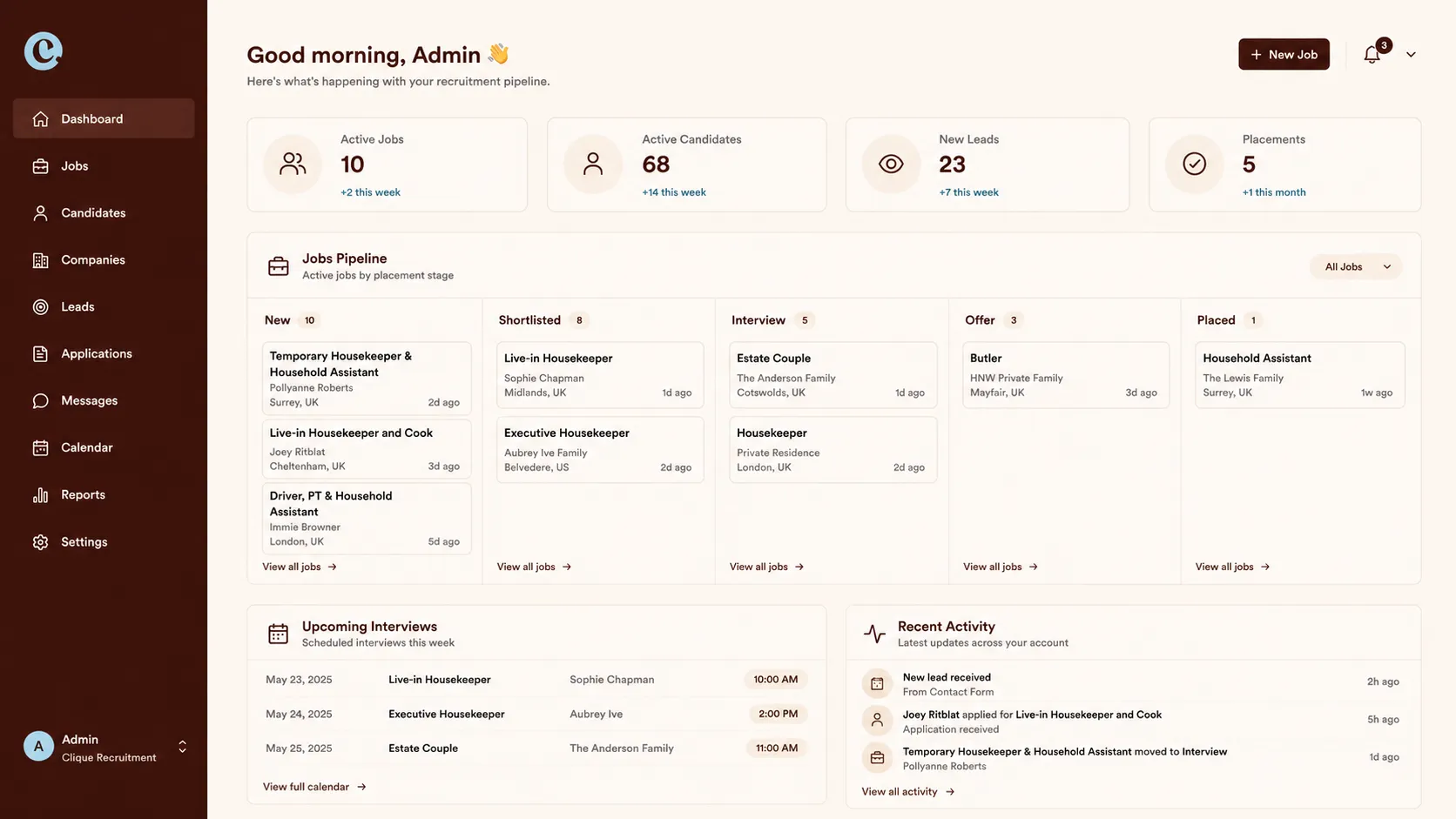
This replaced both the spreadsheet and a third-party platform Clique had been paying for monthly and really not using to its full potential. Because we built this system to their exact process, rather than fitting their process into someone else’s product, we could achieve more with less. No unused features, no complicated workflows, and most importantly, no more paying $7,200 annually for functionality they never touched.
Why we built a custom CRM instead of buying one
None of the technology we used for this project is exotic, and that was a deliberate choice.
The whole thing is one Next.js codebase in TypeScript covering both the public site and the private admin, which means a role published in the CRM and a role shown on the jobs board are guaranteed to match. There’s no gap between what the team enters and what candidates see. The database is PostgreSQL, accessed through Prisma, because candidates, roles, and applications all genuinely relate to each other, and pretending otherwise can get expensive down the line. Transactional email goes out through Resend, and the whole thing deploys to Vercel.
That’s a deliberately vanilla list of tech choices, and that’s the point. A small business needs a system another developer could pick up quickly without a lengthy induction or onboarding process. Every one of those tools has documentation, a hiring pool, and a decade of Stack Overflow answers behind it. There’s no proprietary black box, no dependence on the one person who built it.
The unanticipated bonus: pipeline reporting
Once the pipeline was easily visible, something unexpected happened: it became much more obvious which roles were stalling, and why. This wasn’t asked for in the brief, but because we modelled the data properly from the start, better reporting came along for free. The Clique team can now see at a glance via the dashboard which roles are progressing nicely, which are stuck, and the reasons why.
The outcome for Clique
Clique now owns a system that replaced their cumbersome spreadsheet and an expensive third-party platform that wasn’t fit for purpose. The monthly fees are gone. Applications no longer get lost, and the team can see the state of every role in seconds, without chasing anyone down or digging through email.
Clique are saving $7,200 annually on software subscriptions, and the founder has regained 8 hours per week of her time that was previously spent on admin. Not to mention the system is easily handling dozens of applications per week and multiple roles at once, something that would have been impossible with the old setup.
What used to take an afternoon of cross-referencing spreadsheets and inboxes is now a glance at a screen. That’s valuable time back for the part of the business that actually needs a human: matching the right person to the right home.
If you’re running a business on a spreadsheet that only one person understands, we should talk.